
Lūminé Academy offers Private Classes
featuring a classical Christian education
for Students in Grades K-12
Would you like a certified teacher to provide your homeschooling student with daily online teaching of a year-long course?
Are you looking for a tutor who can help your student improve their critical thinking skills and vocabulary by way of reading fun stories together?
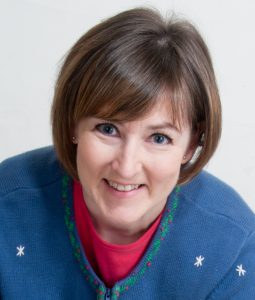 Miss Lungren has served as a teacher for 25 years and as a tutor for fifteen years. She holds a B.A. in Psychology, an M.A. in Education, and an Ed.S. in Educational Leadership. Her teaching certifications are in preK-6, 7-12, and TESOL. She has been the classroom teacher for all grades K-6, middle school science, high school biology, special education, reading specialist, ELL, and guidance counselor for grades K-8.
If your child is homeschooling and you would an experienced teacher to guide them through a year-long course, reach out! With an agreed-upon curriculum, options could include just about any course. Here are a few:
- Grades K-2: Learning to read and write using the Logic of English Foundations program (10 years’ experience)
- Middle School Science (recommend Apologia curriculum)
- High School Biology (recommend Apologia)
- Language Arts (any grade) – we can use a prepared curriculum or I can custom-make one for a selection of books
- Traditional Logic
For curriculum, Miss Lungren recommends checking out Veritas Press, Memoria Press, Classical Academic Press, or even her own A.S.K. Language Arts available here at Lūminé Press!
If the goal is to complete a year-long course for homeschooling, it is recommended to meet between 3 and 5 times per week.
For one or two times per week, spending the year reading a book together is highly recommended. In Miss Lungren’s own words:
I do not tutor as a normal tutor does. My goal is not to improve test scores. Rather, I combine my experience as a guidance counselor with my love for literature, for critical thinking skills, and for the individual student.
I choose a high-interest book to serve as the basis for a year-long ongoing discussion. In a class, we will spend a short amount of time reading (maybe just one or two pages). I will use those pages as a springboard into discussion that requires critical thinking skills.
A book that I have used for this purpose with many students (ranging from fifth grade to tenth grade), even if the student has already read it, is the first book of The Kane Chronicles by Rick Riordan. The book is written from the first person point of view of two siblings (a brother age 14 and a sister age 12). Since the two kids are telling the story, the reader has the opportunity to hear their thoughts. The reader also has the opportunity to hear two different perspectives toward the same story.
It provides great opportunity to ask questions such as: Why do you think this kid (sister or brother) is saying this or thinking this? How do you think the author is trying to influence the reader by having this character have these thoughts? Do you think this character is trustworthy? What is your evidence? Look at what this character says. We don’t know if he’s bad or good. If he’s good, then can we trust he’s telling the truth? If he’s bad, then can we trust he’s telling the truth? Can someone seem like the villain but have good in them? Is everything what it seems?
In other words, we have a lot of philosophical conversations about life. When we talk about life using fictional characters instead of our own lives, it becomes a safe way for students to make connections, to make sense out of things in their own life, and to feel understood. I sometimes make connections to my Christian faith. At times, I engage the student in a discussion about what the worldview of the author seems to be, if the author seems to have an agenda (a message or purpose), and how we can tell.
Finding “pop culture” references in a book is a great way to learn more about a culture. Having lived on three different continents, from Southeast Asia to Europe to the United States from Alaska to New Hampshire, I have experienced many different cultures. A student loves to the opportunity to share about their own culture and learn about others. What’s a steamboat? Who is Elvis?
In summary, each class has some time spent reading and a lot of time spent discussing. I use “guided questioning.” That means I phrase my questions in a way that guides their thinking and helps them to develop critical thinking skills. We get into things like theme, character development, and the author’s agenda (meaning, is the author trying to manipulate us, the readers, to have a certain opinion?). We spend time putting ourselves in the shoes of the author and dissecting how and why he or she wrote a certain paragraph. In this way, we discover the techniques of great writers that the student can use in his or her own writing. We even weave in some word study and grammar study while we’re at it!
I tend to work with students who are smart, have a great heart, are very sweet, but have a lot going on in their mind that they don’t always know how to express, articulate, or share. Understanding social dynamics (how to interact with others in social situations) might be harder for them than understanding science, for example. They might keep this hidden. For kids like these, having a class with me can be very helpful as they can feel understood, cared for and appreciated, and increasingly comfortable in sharing. They can have “a-ha” moments about life.
This is what a class with me is like. While it does improve critical thinking skills, it also improves the student’s speaking and listening skills because of our conversation. We laugh a lot.
I want to highlight that nothing a child says to me is said in confidence. Meaning, I am open with the parent about what is shared in class. I am a teacher who loves working one-on-one with students because they have so much to share. I love to see their face light up when class begins. I love the freedom to tailor our conversation to their level, their interests, and their pace.
Miss Lungren likes to use books that have strong character development, well-developed themes, interesting protagonists and antagonists, clever humor, a range of settings, unique perspectives, and lots of fodder for discussion. Great examples include Harry Potter (especially Book 1), The Hobbit and anything by Tolkien, The Chronicles of Narnia by C.S. Lewis, and more.
Here are some titles listed by various publishers of classical Christian education by grade level:
Grade 3:
Detectives in Togas (Winterfeld)
The Odyssey (Cross)
D’Aulaires’ Book of Greek Myths
Aesop’s Fables
Homer Price (McCloskey)
Black Beauty (Sewell)
Alice in Wonderland
Charlotte’s Web
The Chronicles of Narnia
The Dragon of Lonely Island
The Emperor’s New Clothes (Bustard)
Home Price
Misty of Chincoteague
Peter Pan (Barrie)
The Story of the Treasure Seekers (Nesbit)
Stuart Little
Grade 4:
Dangerous Journey (Pilgrim’s Progress) (Bunyan)
Whipping Boy (Fleischman)
The Door in the Wall (de Angeli)
Beowulf the Warrior (Serrailier)
Robin Hood (Green)
Crispin (Avi)
Shakespeare Stealer (Blackwood)
I, Juan De Pareja (de Trevino)
The Adventures of Tom Sawyer
Charlie and the Chocolate Factory
Faerie Gold (Lindskoog)
The Hobbit
Leepike Ridge (Wilson)
Mary Poppins (Travers)
The Twenty-One Balloons
The Adventures of Robin Hood
Beowulf (Rebsamen)
The Door in the Wall
From the Mixed-Up Files of Mrs. Basil E. Frankweiler
King Arthur (Lancelyn Green)
Macbeth
Story of Rolf and the Viking Bow
Grade 5:
Voyage to Freedom (Gay)
Witch of Blackbird Pond (Speare)
Johnny Tremain (Forbes)
Carry on Mr. Bowditch (Latham)
Salt (Frost)
Little Britches (Moody)
Mrs. Frisby and the Rats of NIMH
The Egypt Game
A Wrinkle in Time
Anne of Green Gables
Heidi
Lad: A Dog
Old Yeller
Robinson Crusoe
The Secret Garden
Swiss Family Robinson
Treasure Island
Where the Red Fern Grows
Blackthorn Winter
Johnny Tremain
Squalls Before War: His Majesty’s Schooner
The Witch of Blackbird Pond
Grade 6:
Famous Men of Greece, Famous Men of Rome, The Aeneid for Boys & Girls, Three Greek Children, Stories from Homer (Iliad and the Odyssey)
Around the World in 80 Days, Call of the Wild, White Fang, A Christmas Carol, Fahrenheit 451, The Fellowship of the Ring, Kidnapped, Little Women, The Yearling, The Jungle Book
Grade 7
King Arthur and his Knights of the Round Table, Grimm’s Fairy Tales, C.S. Lewis (Narnia series), Beowulf, Canterbury Tales, Much Ado About Nothing, The Prince and the Pauper, Trumpeter of Krakow
The Door in the Wall, The Bronze Bow, The Trojan War, the Adventures of Robin Hood, Anne of Green Gables, The Hobbit
Grade 8
Macbeth, Pride and Prejudice, All Quiet on the Western Front, To Kill a Mockingbird, Treasure Island, A Tale of Two Cities, Animal Farm, Fahrenheit 451
The Wind in the Willows, Julius Caesar, Treasure Island, Poetry & Short Stories,
Sir Gawain and the Green Knight (Tolkien’s translation), The Song of Roland, Henry V, The Hobbit, The Lord of the Rings, The Merry Adventures of Robin Hood, A Midsummer’s Night Dream, The Nine Tailors
Fee: Each class is one hour and the fee depends on the level of class. Science classes for middle school and high school, for example, require significantly more prep and have a higher fee. School-year classes run for 32 weeks following a typical school schedule (beginning the Monday before Labor Day with breaks during the week of Columbus Day, the week of Thanksgiving, two weeks at Christmas, week of Presidents’ Day, and week before Easter; and then ending in mid-May). The course fee may be paid up front, over 4 payments, or over 8 payments. If the student is unable to make a class, the teacher will record the class for the student to watch later at their convenience. Summer sessions run for 10 weeks from early June to mid-August and are paid fully in advance. After an initial class which is free, a contract will be signed to establish clear communication and agreement of the terms of the class. More information on the fee structure is below.
Technology required: It is helpful for the student to have an iPad (first choice) or tablet (second choice) with a stylus or Apple pencil. The student also needs access to a second device for the video conferencing. This would likely be a laptop.
Inquiries: Please contact Miss Elsie Lungren at: elsie@luminepress.com
Fee Structure
Basic Course for 32-Week School Year
| Classes per week | Discount | 1 payment | 4 payments each | 8 payments each |
|---|---|---|---|---|
| 1 | 2560 | 640 | 320 | |
| 2 | 5% | 4864 | 1216 | 608 |
| 3 | 10% | 6912 | 1728 | 864 |
| 4 | 15% | 8704 | 2176 | 1088 |
| 5 | 20% | 10240 | 2560 | 1280 |
Higher Level Course (science or advanced literature) for 32-Week School Year
| Classes per week | Discount | 1 payment | 4 payments each | 8 payments each |
|---|---|---|---|---|
| 1 | 3520 | 880 | 440 | |
| 2 | 5% | 6784 | 1696 | 848 |
| 3 | 10% | 9792 | 2448 | 1224 |
| 4 | 15% | 12544 | 3136 | 1568 |
| 5 | 20% | 15040 | 3760 | 1880 |
Basic Course for 10-Week Summer Session
| Classes per week | Discount | One payment |
|---|---|---|
| 1 | 800 | |
| 2 | 5% | 1520 |
| 3 | 10% | 2160 |
| 4 | 15% | 2720 |
| 5 | 20% | 3200 |
Higher Level Course (science or advanced literature) for 10-Week Summer Session
| Classes per week | Discount | One payment |
|---|---|---|
| 1 | 1100 | |
| 2 | 5% | 2120 |
| 3 | 10% | 3060 |
| 4 | 15% | 3920 |
| 5 | 20% | 4700 |